
Back to top


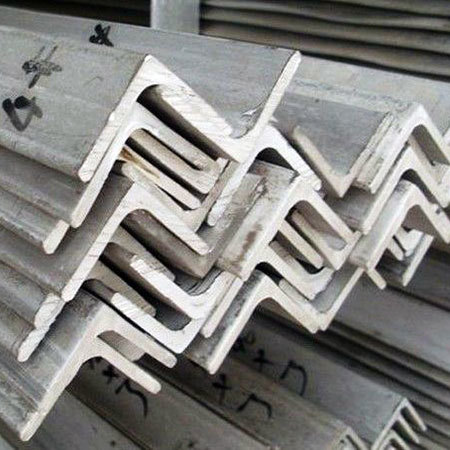
Engineered for Structural Excellence
Industrial GI Angles provide solid support for construction and fabrication projects, adhering to IS 277 and ASTM A653 standards. With a robust galvanized coating, sharp edges, and precise 90-degree bends, these angles ensure precise assembly and longevity in demanding environments. Their standardized dimensions enable reliable implementation across various structural frameworks.
Superior Corrosion Resistance
The zinc coating, ranging from 80 to 120 GSM, acts as a protective layer against corrosion and weather-related degradation. This galvanized finish preserves the base iron, maintaining structural strength and reducing maintenance costs. The result is a silver-toned component that offers both aesthetic appeal and enduring functionality.
Versatile Application and Custom Packaging
Ideal for use in construction, structural frameworks, and fabrication, these GI angles are designed with adaptability in mind. Whether supplied loose or packaged according to customer preferences, they accommodate the needs of distributors, suppliers, and wholesalers across the Indian market, ensuring streamlined logistics and satisfaction.




Industrial GI Angle
42.00 - 60.00 INR
Product Details:
- Type Industrial GI Angle
- Material Galvanized Iron (GI)
- Size 50 mm x 50 mm
- Weight Approx. 22 kg per piece
- Length 6 Meter
- Thickness 5 mm
- Color Silver
- Click to View more
X
Industrial GI Angle Price And Quantity
- 1000 Kilograms
- 42.00 - 60.00 INR
- Construction, Structural Frameworks, Fabrication
- 90 Degree
- L Angle
- IS 277 / ASTM A653
- Loose or as per customer requirement
- 340-410 MPa
- 80-120 GSM
- Yes, zinc coating provides enhanced protection
- Sharp & Straight Edge
Industrial GI Angle Product Specifications
- 6 Meter
- 50 mm x 50 mm
- IS 2062 or Equivalent
- Galvanized
- Silver
- Industrial GI Angle
- 5 mm
- Galvanized Iron (GI)
- Approx. 22 kg per piece
- Construction, Structural Frameworks, Fabrication
- 90 Degree
- L Angle
- IS 277 / ASTM A653
- Loose or as per customer requirement
- 340-410 MPa
- 80-120 GSM
- Yes, zinc coating provides enhanced protection
- Sharp & Straight Edge
Industrial GI Angle Trade Information
- 400 Kilograms mt Per Day
- 1 Week
Product Description
With vast industrial knowledge and deep market understanding we have been able to emerge as a trusted supplier of Industrial GI Angle. This angle has unidirectional roving that provides longitudinal tensile strength. It is ideal to construct shelves, frames, work benches, equipment stands and other structures. Our expert agents source this angle from the most reputed and trusted vendors of the market. It is widely used in construction, automotive and marine industry. The offered Industrial GI Angle possesses greater flexural strength than timber.
Engineered for Structural Excellence
Industrial GI Angles provide solid support for construction and fabrication projects, adhering to IS 277 and ASTM A653 standards. With a robust galvanized coating, sharp edges, and precise 90-degree bends, these angles ensure precise assembly and longevity in demanding environments. Their standardized dimensions enable reliable implementation across various structural frameworks.
Superior Corrosion Resistance
The zinc coating, ranging from 80 to 120 GSM, acts as a protective layer against corrosion and weather-related degradation. This galvanized finish preserves the base iron, maintaining structural strength and reducing maintenance costs. The result is a silver-toned component that offers both aesthetic appeal and enduring functionality.
Versatile Application and Custom Packaging
Ideal for use in construction, structural frameworks, and fabrication, these GI angles are designed with adaptability in mind. Whether supplied loose or packaged according to customer preferences, they accommodate the needs of distributors, suppliers, and wholesalers across the Indian market, ensuring streamlined logistics and satisfaction.
FAQs of Industrial GI Angle:
Q: How does the zinc coating on the GI Angle improve corrosion resistance?
A: The zinc coating, applied at a thickness of 80120 GSM, creates a barrier that protects the underlying iron from moisture and chemicals. This galvanization process significantly extends the lifespan of the angle by preventing rust and deterioration, making it ideal for structural applications exposed to harsh conditions.Q: What are the main applications of Industrial GI Angles in construction?
A: Industrial GI Angles are commonly used in structural frameworks, support brackets, and fabrication of various building components. Their robust tensile strength and precise 90-degree bend ensure stability and safety in both commercial and industrial construction projects.Q: When should I choose a GI Angle with IS 277 or ASTM A653 standard?
A: You should select GI Angles conforming to IS 277 or ASTM A653 when you require assured quality, durability, and compliance with international and Indian standards. These standards guarantee consistent performance for critical structural and fabrication uses.Q: Where are these Industrial GI Angles typically supplied and used in India?
A: These angles are distributed, supplied, and traded by wholesalers and traders throughout India. They are widely used across regions in diverse projects, from commercial buildings to infrastructure and industrial plants, wherever reliable structural support is essential.Q: What is the process used to achieve the galvanized finish on the angle?
A: The galvanization process involves immersing mild steel angles in molten zinc, resulting in a uniform coating that adheres strongly to the surface. This process ensures the angles acquire corrosion resistance, a silver finish, and enhanced durability.Q: How does the sharp and straight edge benefit construction or fabrication?
A: Sharp and straight edges provide precise alignment during assembly, allowing for accurate measurements and seamless integration into frameworks or structures. This reduces installation time and enhances the overall strength and finish of the construction.Q: What are the packaging options available for these GI Angles?
A: Industrial GI Angles can be delivered loose or packaged as per customer requirements. This flexibility ensures safe handling, efficient transport, and customization based on project or logistical needs.Tell us about your requirement
Price:
Quantity
Select Unit
- 50
- 100
- 200
- 250
- 500
- 1000+
Additional detail
Mobile number
Email

Other Products in 'GI Angle' category

KAMRUP STEEL TRADERS
GST : 18AAEFK2981L1ZW
GST : 18AAEFK2981L1ZW
- Air Assam Building, Ground Floor, Athgaon, Sj Road, Dist. Kamrup Metro, Guwahati - 781001, Assam, India
- Phone : 08071793292


- Mr. Anirudh Harlalka (Managing Director)
- Mobile : 08071793292
-
 Send Inquiry
 Send Inquiry
 |
KAMRUP STEEL TRADERS
All Rights Reserved.(Terms of Use) Developed and Managed by Infocom Network Private Limited. |
